How Do I Know I'm Getting the Right Ashes Back?

Ralph Torres • April 8, 2026

How Do I Know I'm Getting the Right Ashes Back?

By Ralph Torres | Torres Cremation and Burial Services


This is one of the most common questions I hear from families who are considering cremation — and honestly, it's one of the most important ones to ask. It tells me that a family loves their person. That they're not just going through motions. That the ashes they receive back aren't just "remains" to them — they're still their mother, their father, their husband, their child.

The question deserves a real answer. So here it is.


The short answer: there are strict safeguards in place


Reputable cremation providers follow an identification process from the moment a loved one comes into their care to the moment the ashes are returned to the family. The industry standard — and California law — requires that your loved one never be without identification throughout the entire process.


At Torres Cremation and Burial Services, we use a metal identification disc that stays with your loved one from the time they are received into our care all the way through the cremation process. That disc is placed with the remains and returned to you inside the urn. It is a permanent, heat-resistant tag that cannot be burned away. When you open the urn, it is there.


How the process works, step by step


When your loved one comes into our care, we assign them a unique case number. That number is documented in our records, attached to their identification tag, and tracked at every stage — transfer, preparation, cremation, and the return of remains. Nothing moves without that number being verified.


Before cremation begins, a licensed member of our staff confirms the identification — by name, case number, and tag — and signs off on it. Only one cremation is performed at a time in our equipment. When the process is complete, the remains are carefully collected, placed in a container, and the identification disc goes in with them. The case number on the disc matches the case number in our records, which matches the authorization form you signed.


That's not a courtesy. It's a legal requirement under California Health and Safety Code. And it's how we operate every single time, for every single family.


What you can ask your funeral home


If you're working with any cremation provider — us or anyone else — you have every right to ask these questions directly:

Ask whether they use a metal identification tag that stays with the deceased through cremation. Ask whether they cremate one person at a time. Ask whether they are licensed by the California Cemetery and Funeral Bureau, and whether their cremation equipment is inspected and certified. Ask to see their identification and tracking process in writing.

A trustworthy provider will answer every one of those questions without hesitation. If a provider seems reluctant or vague, that tells you something.


What if I still have doubts?


Some families want an additional layer of reassurance. That's completely understandable. A few options exist: some providers offer witnessed cremation, where a family member can be present when the cremation begins. This isn't available everywhere, but it is an option worth asking about if it would bring you peace of mind.


You can also ask your funeral home for documentation — a cremation certificate that identifies the deceased by name and confirms the date and location of cremation. This is a standard document that any licensed provider should be able to give you.


Why this question matters so much


I've had families apologize for asking this. They say things like, "I hope this isn't offensive" or "I just want to make sure." Please — never apologize for asking. It's not offensive. It's love. And the fact that you're asking it means you're paying attention, which means you're going to choose the right provider.


The ashes we return to you are your loved one. We treat that responsibility with the seriousness it deserves — not because we have to, but because we understand exactly what we're holding.


If you have more questions about our cremation process, please call us. We'll walk you through every step before you ever have to make a decision.


Ralph Torres | Founder, Torres Cremation and Burial Services

Veteran-owned. Family-operated. Serving Southern California since 2014.


📞 Torres Cremation and Burial Services — (626) 872-0021 | torresmortuary.com
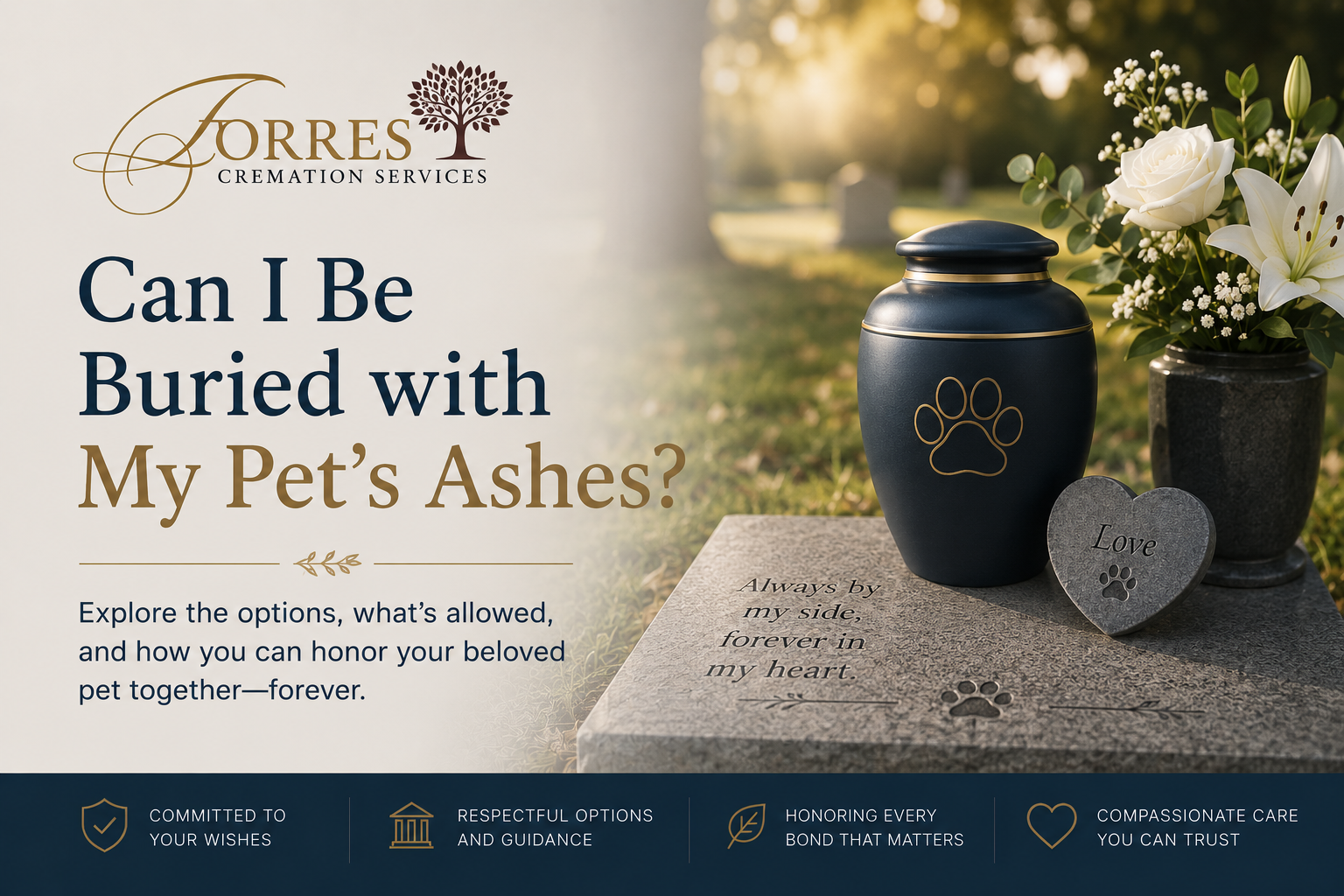


Can I Be Buried with My Pet's Ashes?
By Ralph Torres June 1, 2026
Yes — and we've done it many times. Ralph Torres explains how to be buried with your pet's ashes, what cemeteries allow it, and how to make sure it happens right.
By Ralph Torres June 1, 2026
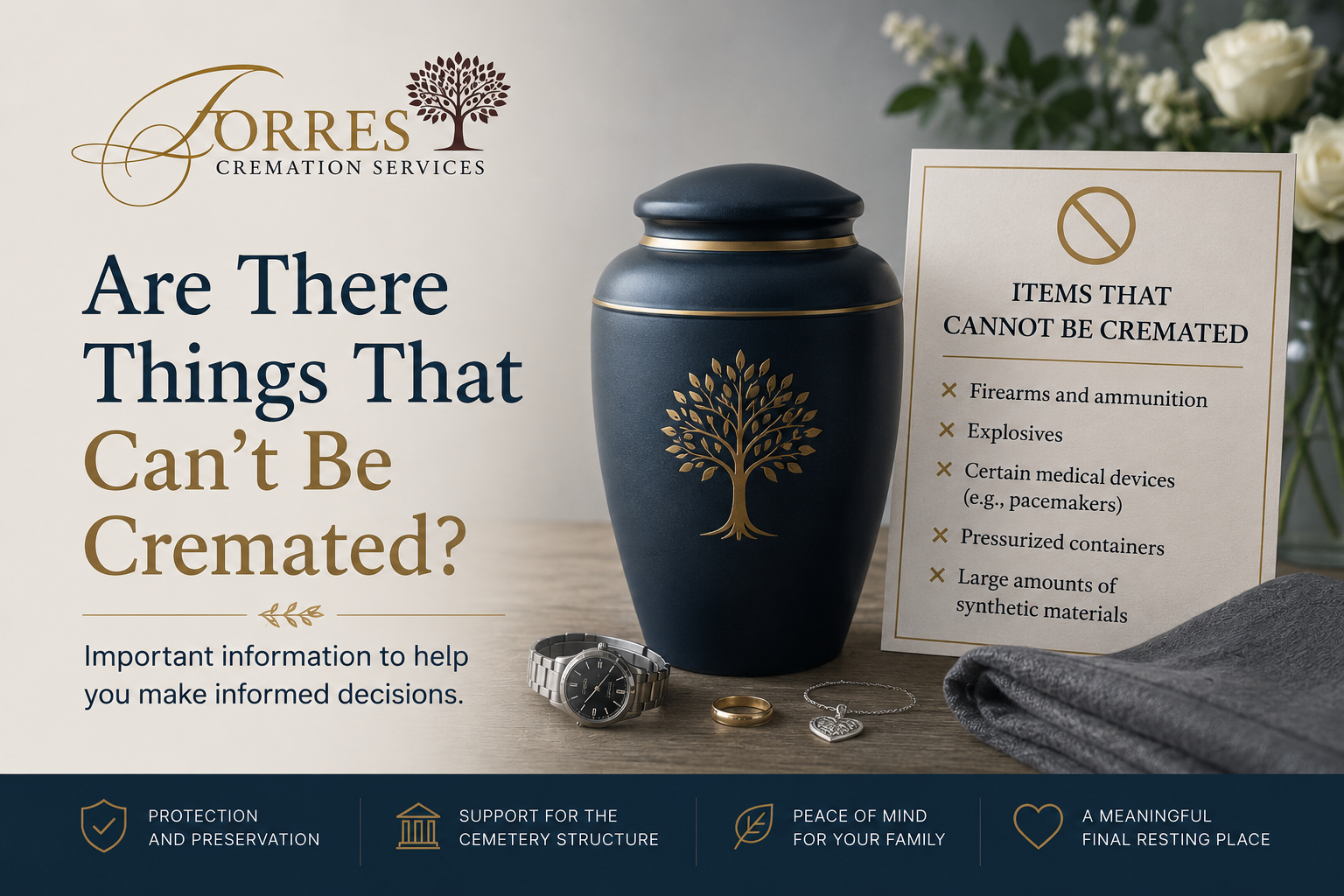
Are There Things That Can't Be Cremated? By Ralph Torres | Torres Cremation and Burial Services When families choose cremation, they sometimes assume the process is straightforward — that everything simply goes in together and comes back as ashes. For the most part, that's true. But there are a number of items and medical devices that cannot go into a cremation retort, some for safety reasons, some for legal reasons, and some for both. This is not meant to be alarming. It's practical information that helps families prepare, and it's the kind of thing a good funeral home will ask you about from the very first conversation. The most important one: pacemakers If your loved one had a pacemaker — or any implanted cardiac device such as an ICD (implantable cardioverter-defibrillator) — this is the single most critical piece of information you can give us when you call. A pacemaker contains a battery and sealed electronic components. Under the extreme heat of cremation, which reaches temperatures between 1,400 and 1,800 degrees Fahrenheit, that battery can explode. We are not talking about a small pop — it is a serious explosion capable of damaging the cremation equipment, injuring staff, and disrupting the process entirely. This is why pacemakers must be removed by a licensed medical professional before cremation can take place. It is a straightforward procedure, but it requires advance notice so it can be arranged in time. If we know on day one, we handle it. If we find out at the last moment — or not at all — it creates real problems that affect the timeline and, more importantly, the safety of our staff. Please tell us. Even if you're not certain whether your loved one had one, tell us what you know and we will verify it with the hospice, hospital, or attending physician. It is one of the first questions we ask, and there is never any judgment attached to it — we just need to know. Other implanted electronic devices carry the same risk and require the same attention: neurostimulators, insulin pumps with batteries, certain drug infusion devices, and radioactive implants used in cancer treatment. If you are aware of any implanted medical device of any kind, share it with us. Items placed with the body Families sometimes want to include meaningful items with their loved one during cremation — a photograph, a letter, a rosary, a small keepsake. Many of these are perfectly fine. Others are not, and it's worth knowing the difference before the day of the service. Thick foam rubber, fiberglass, and certain synthetic materials produce toxic fumes when burned and cannot go into the retort. Glass items, metal objects thicker than thin jewelry, and sealed containers of any kind — including bottles or jars — cannot be cremated safely. Anything pressurized is a serious hazard. Natural materials — thin paper, cloth, wood, dried flowers, thin leather — are generally acceptable. If you want to include something and you're not sure, ask us. We will tell you honestly whether it's safe, and in some cases we can return the item to the family after the cremation rather than including it. What about jewelry and personal items on the body? This is a question families often feel awkward asking, but it's an important one. Gold, silver, and most metals will survive the cremation process but will not look the same afterward — they will be misshapen and embedded in the remains. They are typically separated out during the processing of the ashes. If jewelry or a personal item has sentimental value and the family wants it returned, we need to know before cremation begins. Once the process starts, retrieval is not possible. We will carefully remove and set aside anything you designate beforehand and return it to you with the ashes. The same applies to dental gold. If you would like it recovered, let us know in advance. Clothing and the casket or container The container the body is placed in for cremation — whether a cremation casket, a rental casket used for a viewing, or an alternative container — must be made of combustible materials. Caskets with metal handles, thick rubber seals, or fiberglass panels require special handling or substitution before cremation. We manage this routinely, but it's another reason that communication between family and funeral home matters from the start. Natural fiber clothing is fine. Polyester and synthetic fabrics are generally manageable in small quantities but can affect the process if used heavily. Again — if you have a specific outfit in mind for your loved one, talk to us and we'll let you know if there's anything to consider. When in doubt, tell us everything The overarching principle here is simple: the more we know about your loved one's medical history and your wishes for items to include, the better we can serve you and the safer the process is for everyone. Nothing you tell us will be judged. We have heard everything, and our only concern is doing this right. If something comes up after arrangements have been made — you remembered a device, or found something you'd like included — call us immediately. We would always rather know early than discover something at the wrong moment. Choosing cremation is a meaningful decision, and we are committed to carrying it out with the care and professionalism your loved one deserves. If you have questions about what to expect, or what information to have ready when you call, we are here for you around the clock. Ralph Torres | Founder, Torres Cremation and Burial Services Veteran-owned. Family-operated. Serving Southern California since 2014. 📞 Torres Cremation and Burial Services — (626) 872-0021 | torresmortuary.com
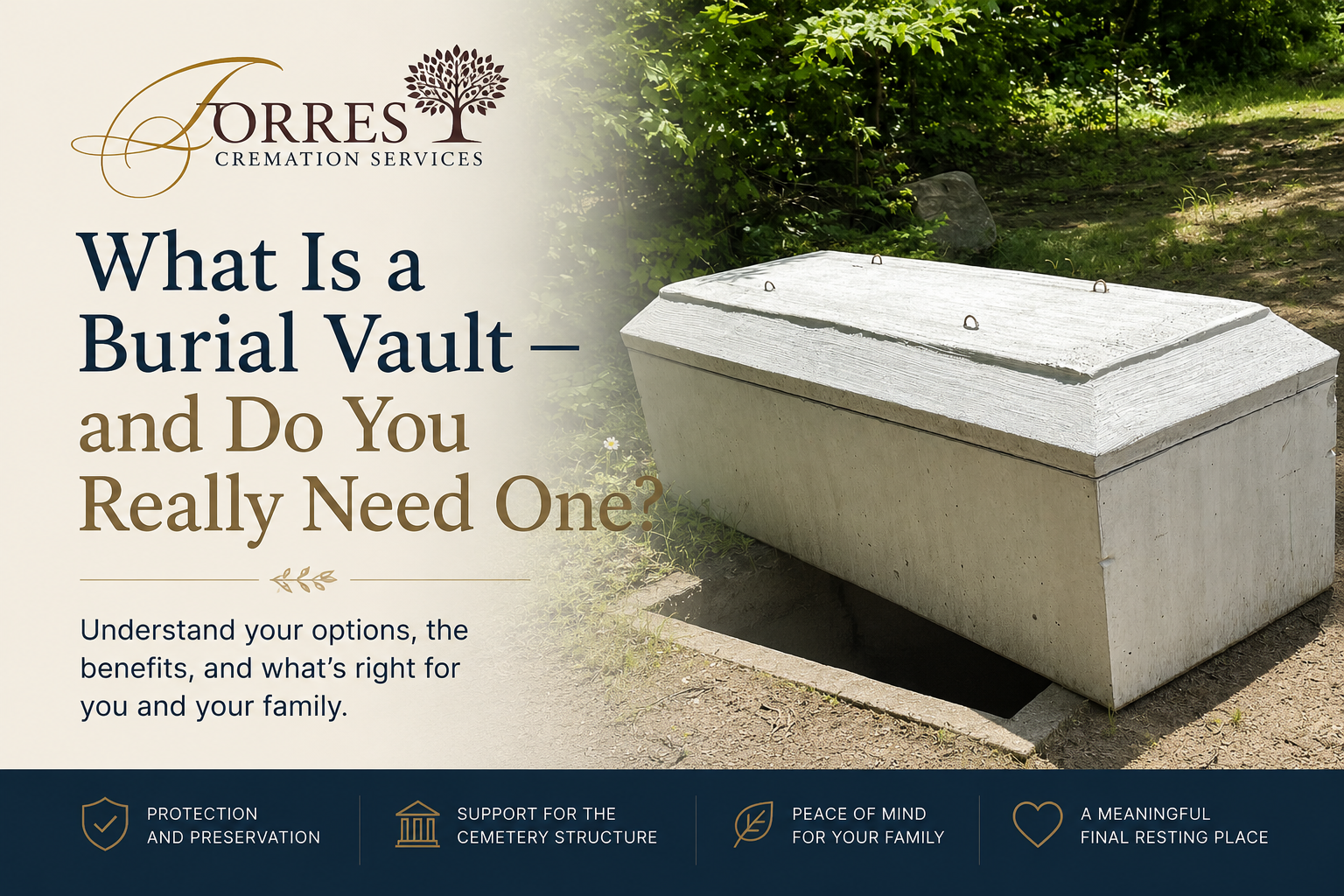
What Is a Burial Vault — and Do You Really Need One
By Ralph Torres May 12, 2026
Most families assume a burial vault preserves the casket. It doesn't. Ralph Torres explains what it really does, why cemeteries require it, and what to ask before you pay.
By Ralph Torres March 9, 2026
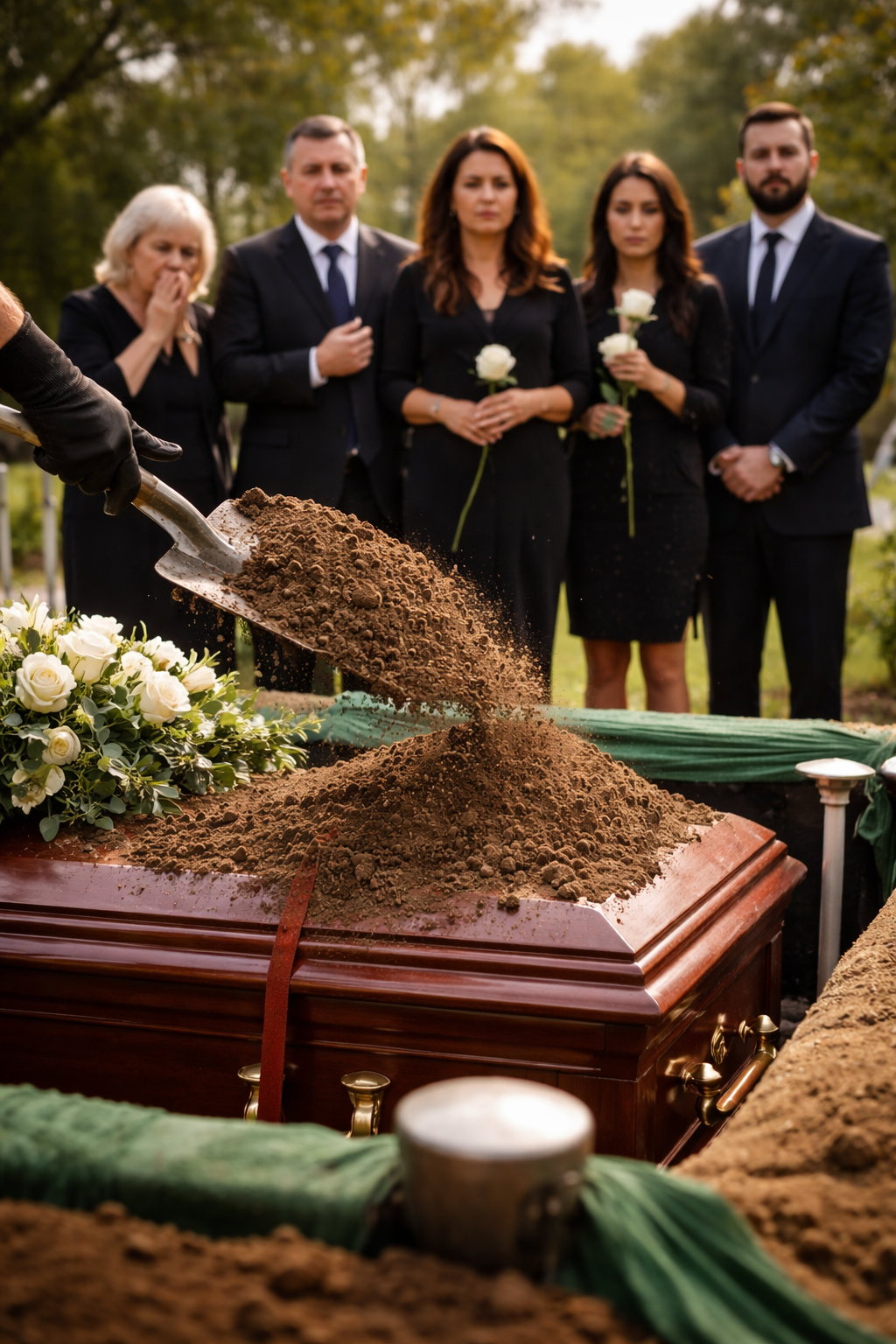
The Importance of Staying Until the Final Goodbye By Ralph Torres | March 9, 2026 Over the years, I've stood at many gravesides. And one thing I've noticed is that the families who stay until the very end — until the grave begins to close — often leave with a different kind of peace than those who slip away before that moment. It's not something we pressure families to do. Grief is personal, and every family moves through it differently. But when someone asks me, I always tell them honestly: if you can stay, it's worth it. Why that final moment matters There's something our minds need in order to begin to heal — a concrete, undeniable goodbye. Not just the church service or the kind words from friends, but the actual, physical farewell. Watching the casket lowered and the earth begin to close is hard. It is supposed to be hard. But it's also real, and that reality is what allows many people to finally breathe and begin to grieve honestly. Grief counselors call it closure, but it's simpler than that. It's your heart catching up to what your mind already knows. A tradition rooted in faith and family In many Catholic and Hispanic families, staying at the graveside until the end isn't even a question — it's simply what you do. You accompanied your loved one through life. You accompany them to their resting place. Some families scatter a handful of dirt, some place a flower, some say a final Rosary. These small acts carry enormous weight. They say: I was here. I didn't look away. I loved you until the very last moment. If it feels like too much Not everyone can stay, and there's no shame in that. Some people are too overwhelmed, some have young children, and some just need to step back. Whatever you decide, know that your love for your loved one isn't measured by how long you stood at the graveside. But if you're on the fence, I'd gently encourage you to stay. In over a decade of doing this work, I've never had a family member tell me they regretted it. If you have questions about what to expect at a graveside service or need support planning a farewell, we're always here for you. Ralph Torres | Founder, Torres Cremation and Burial Services Veteran-owned. Family-operated. Serving Southern California since 2014.  📞 Torres Cremation and Burial Services — (626) 872-0021 | torresmortuary.com
By Ralph Torres February 9, 2026
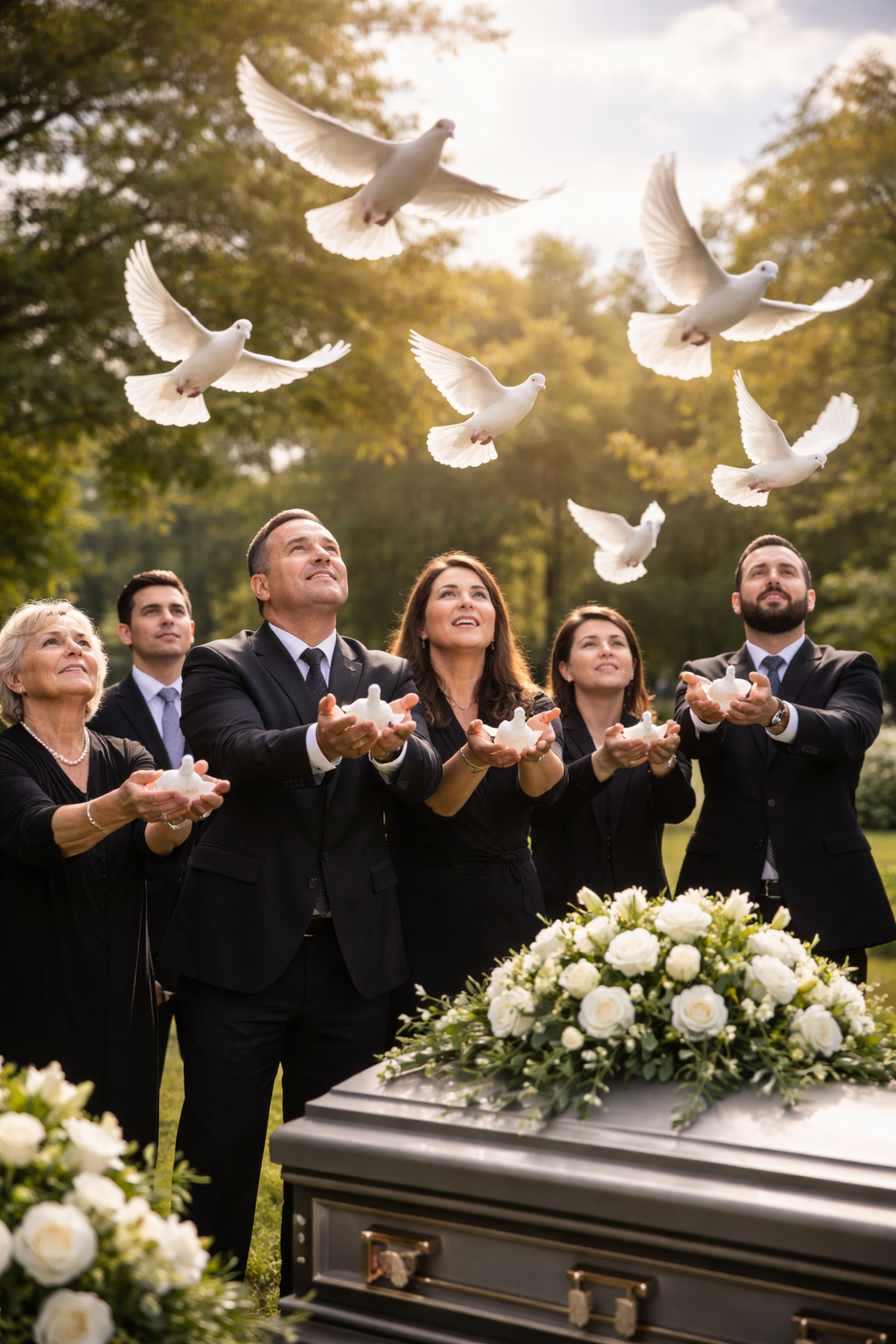
The Meaning of Releasing White Doves at a Funeral By Ralph Torres | February 9, 2026 There's a moment at certain graveside services that I've watched stop people mid-breath. The doves are released, they rise into the sky, and for just a few seconds, nobody moves. Nobody speaks. Something shifts. It doesn't matter if you're deeply religious or not. That image — something pure and alive, ascending — touches something deep. And for the families I serve, it often becomes the most remembered part of the entire service. What the white dove represents Across cultures and faiths, white doves have long carried the same meaning: peace, purity, and the soul's passage to something beyond. In Christian and Catholic tradition, the dove is a symbol of the Holy Spirit. In many Hispanic families, releasing a dove is an act of faith — a visual prayer that says: we trust you are in God's hands now. Depending on how many doves are released, the symbolism can deepen. A single dove represents the soul of the departed. Two doves are often chosen to symbolize a love that continues beyond death. Three honor the Holy Trinity. A full release of many doves speaks to community — the collective love and witness of everyone gathered. When and how it happens Dove releases typically take place at the cemetery, at the close of the graveside service — after the final prayers, after the last blessing, when words have given way to silence. Families often say a prayer as the doves are released, or simply stand quietly and watch them go. It doesn't require a large service or an elaborate ceremony. Some of the most moving dove releases I've seen happened at very small, intimate services — just close family, a few flowers, and that moment of letting go. If you're considering it We can help coordinate a dove release as part of any service we provide. We'll make sure it's handled with care, properly timed, and respectful of your family's faith and traditions. If you'd like to know more, just ask — it's one of those additions that families almost always look back on with gratitude. Ralph Torres | Founder, Torres Cremation and Burial Services Veteran-owned. Family-operated. Serving Southern California since 2014. 📞 Torres Cremation and Burial Services — (626) 872-0021 | torresmortuary.com 📞 Contact us today to speak with a compassionate member of our team.
By Ralph Torres January 12, 2026
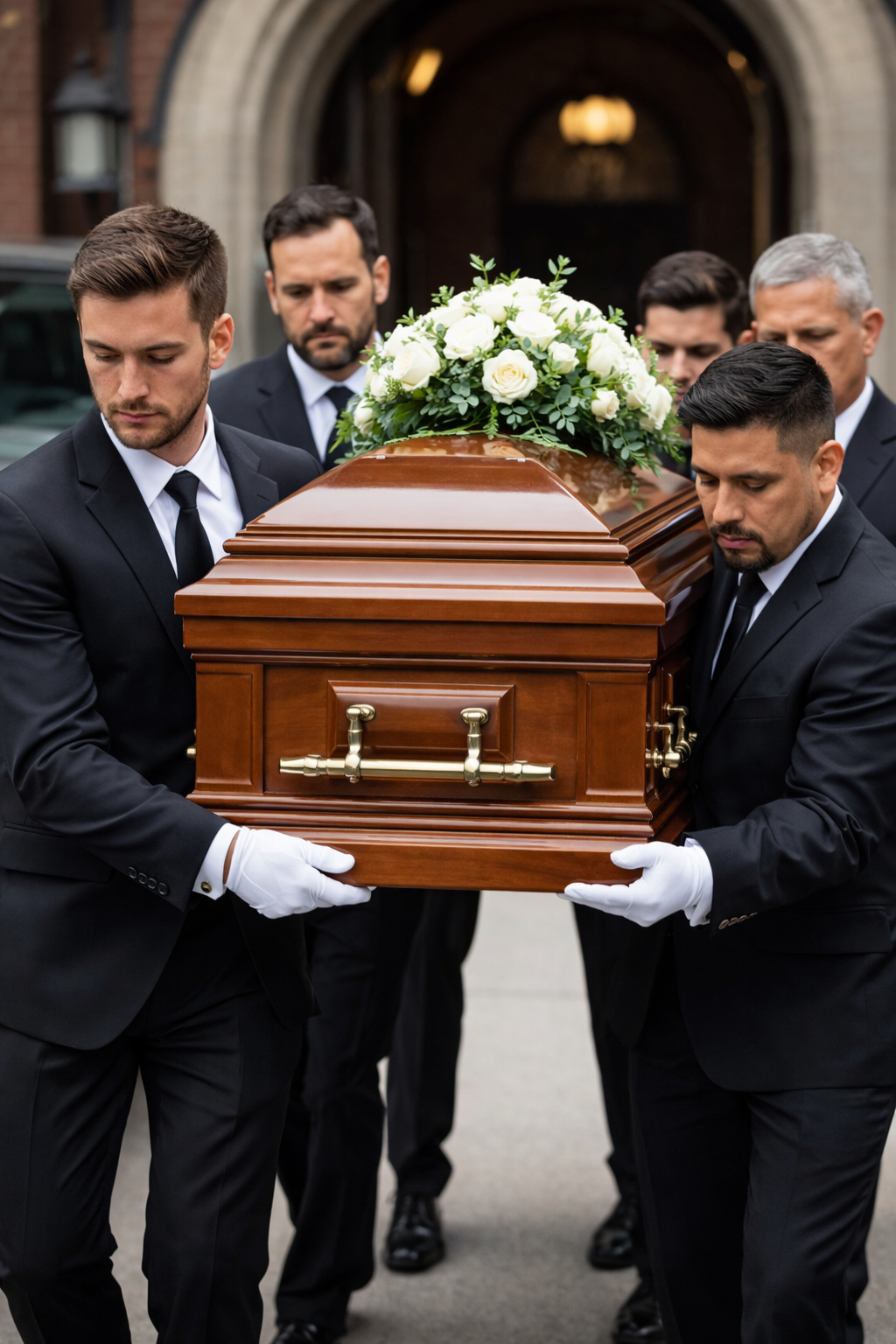
The Meaning and Importance of Pallbearers By Ralph Torres | January 12, 2026 Being asked to carry the casket is one of the oldest honors a person can be given at a funeral. It's a role that goes back centuries, and yet every time I watch pallbearers carry a loved one to their final resting place, it never feels old. It feels exactly as weighty and sacred as it is. If you've been asked to serve as a pallbearer — or if you're trying to choose who to ask — here's what I'd want you to know. Where the word comes from The word "pallbearer" comes from the "pall" — a cloth that was traditionally draped over the casket. Those who held its corners were the pallbearers. Today, pallbearers physically carry or escort the casket itself, but the meaning hasn't changed: you are physically accompanying your loved one on their final journey. Who to choose Pallbearers are usually people with a close personal connection to the deceased — sons, daughters, grandchildren, siblings, lifelong friends, or colleagues who meant a great deal. Increasingly, families choose both men and women, which is entirely appropriate and often deeply meaningful. Some families also designate honorary pallbearers — people who are recognized during the service but don't physically carry the casket, often due to age or health. It's a beautiful way to include more people in this act of honor. Most funerals use six pallbearers, though larger services sometimes use eight. Our team will always brief your pallbearers beforehand so nobody feels unsure of what to do or where to stand. What the moment means in Catholic and Hispanic tradition In many of the families we serve, the role of pallbearer is deeply tied to faith. To carry someone to their resting place is seen as a final act of accompaniment — you are walking them home. Prayers like the Rosary are often recited during the procession, and the act of carrying is understood as both a physical and spiritual service. It is one of the most emotionally difficult roles at a funeral. It is also one of the most healing. Families who have served as pallbearers often tell me afterward that they're glad they did it — that having something active and meaningful to do helped them feel less helpless in their grief. If you're unsure who to ask or how to honor someone in this role, we're here to help you think it through. Ralph Torres | Founder, Torres Cremation and Burial Services Veteran-owned. Family-operated. Serving Southern California since 2014.  📞 Torres Cremation and Burial Services — (626) 872-0021 | torresmortuary.com
By Ralph Torres October 18, 2025
How to Write a Meaningful Eulogy By Ralph Torres | October 18, 2025 One of the questions I hear most often from families is: "How do I write the eulogy?" And I always say the same thing: you don't need to write something perfect. You need to write something true. Being asked to give a eulogy is an act of trust. It means the people who loved this person believe that your voice — your relationship, your memories — is the right one to carry their story. That's worth something. And it's also enough. Start with a feeling, not a list of facts A eulogy isn't a biography. It isn't a resume of accomplishments or a timeline of life events. It's a portrait — and the best portraits capture feeling, not just fact. Before you write a single word, sit quietly and ask yourself: What made this person them? Not what they did for a living or how many grandchildren they had — but what was the quality that filled a room when they walked in? What did they teach you without ever sitting you down and saying, "I'm going to teach you something"? What did you take for granted about them that you now realize was a gift? Write from that place. The rest will follow. A simple structure that helps If you need a framework to start, this one works well: open with who you are and how you knew the person, find one central truth about who they were, build around one or two specific memories that bring that truth to life, share what you'll carry forward, and close with a blessing or a simple thank-you. You don't have to follow it exactly. But it gives you something to hold onto when the blank page feels overwhelming. On getting emotional You will probably cry. That's okay. More than okay — it's expected, and it's honest. A few things help: print your eulogy rather than reading from a phone, take slow breaths between sections, and let yourself pause without apologizing. A pause isn't a breakdown. It's just a moment where love is too big for words, and everyone in that room understands. I've sat at hundreds of services. The eulogies people remember are never the perfectly delivered ones. They're the ones where you could feel that the person speaking meant every word. If you'd like help thinking through what to say, or if you're feeling stuck, call us. We walk families through this all the time, and we're glad to help. Ralph Torres | Founder, Torres Cremation and Burial Services Veteran-owned. Family-operated. Serving Southern California since 2014. 📞 Torres Cremation and Burial Services — (626) 872-0021 | torresmortuary.com
From Sorrow to Celebration: Ways Families Personalize Services to Reflect a Life Loved with Love
By Ralph Torres October 18, 2025
From Sorrow to Celebration: Ways Families Personalize Services to Reflect a Life Loved with Love
By Ralph Torres October 18, 2025
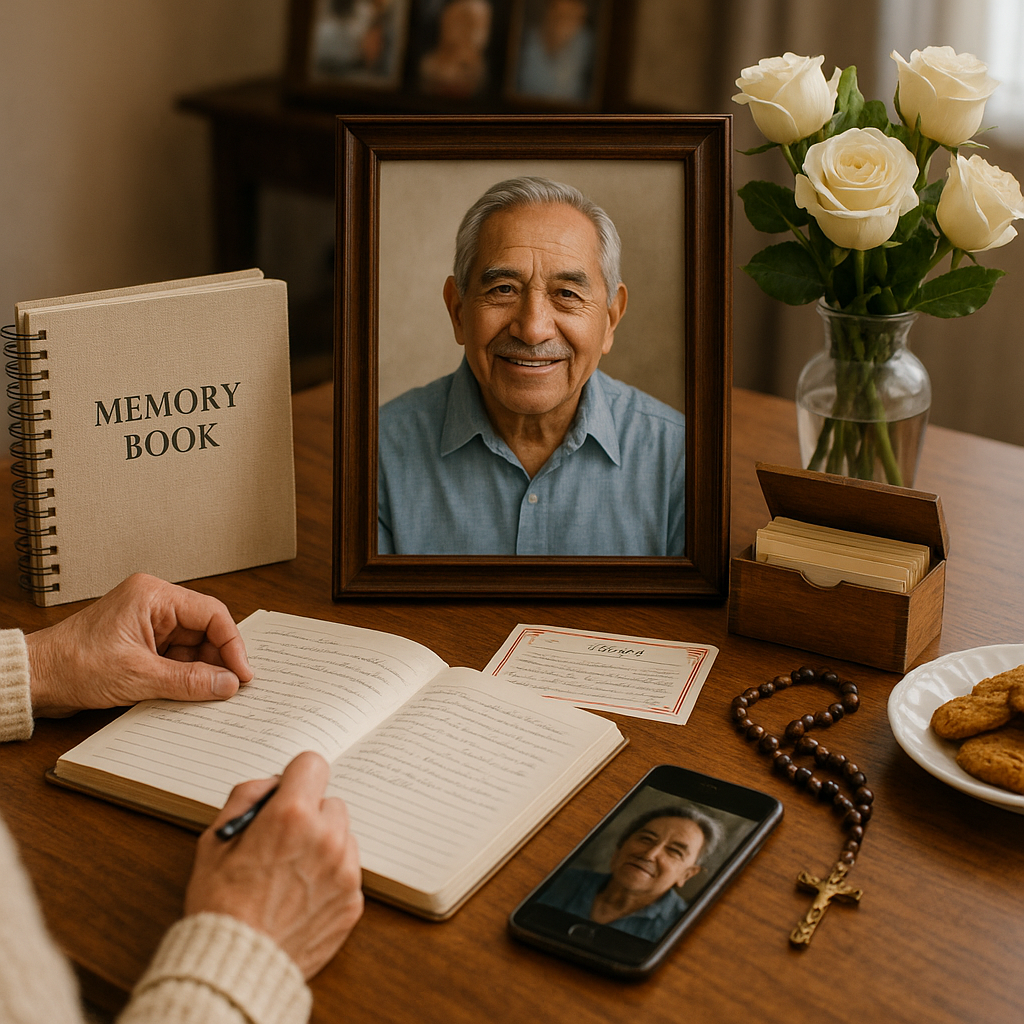
How Storytelling Heals: Preserving a Loved One’s Legacy Beyond the Funeral When a loved one passes away, what we miss most are not just their presence — but their stories. The moments that made us laugh, the values they lived by, the lessons they taught without ever needing to say a word. At Torres Mortuary, we believe that healing is not found in forgetting, but in remembering with purpose. Storytelling is one of the most meaningful ways families continue a loved one’s legacy long after the funeral is over. It turns grief into gratitude, memory into legacy, and absence into a source of strength. Why Storytelling Matters in Grief When a family member shares a memory, they are doing more than reminiscing — they are: affirming that this life mattered, preserving the wisdom of a generation, and passing down identity, love, and belonging to those who will come after. Stories become a bridge between past and future. They allow the next generation — children and grandchildren — to know the person they may not have had the chance to grow up with. Ways to Preserve a Loved One’s Story There are many beautiful and simple ways to ensure that legacy lives on: Method Meaningful Outcome Memory Books Family members contribute prayers, letters, photos, and reflections Recorded Audio or Video Messages Voi ces and expressions are preserved forever Sharing Favorite Recipes or Traditions C ulture and family history live on Legacy Journals Stories are saved for future generations to read Story Circles at Family Gatherings Keeps memory alive through spoken word. Even the smallest gesture — like writing a favorite saying or life lesson in a journal — can become a cherished treasure years later. Faith and Legacy: Bearing Witness to a Life Well Lived For families of faith, storytelling is a form of spiritual remembrance. It says: “They are not gone. Their love continues through us.” Shared memories become a testimony — a witness to how God worked through their life, their kindness, their sacrifices, and their devotion to family. Continuing the Story A funeral is not the end of a person’s story — it is a turning point where their legacy begins to live in a new way: through the hearts of those who remember them. At Torres Mortuary, we encourage families to take time after the funeral to gather, share stories, print photos, create albums, and keep traditions alive. Every memory shared becomes a thread in the tapestry of the family’s history. We Are Here to Help You Honor Their Story Our role is not only to guide families through a service — but to help them carry a legacy forward with dignity, love, and faith. If you’d like ideas or tools to help preserve a loved one’s story, we are always here to support you. Torres Mortuary Where every life is remembered, honored, and carried forward through love.
Understanding Disinterment and How We Assist Families
By Ralph Torres October 2, 2025
Understanding Disinterment and How We Assist Families